

Nestled in the heart of the Caribbean, Saint Barthélemy stands as a unique territory where French governance, exclusive tourism, and limited geography converge to shape a distinctive demographic landscape. This small island collectivity, measuring just twenty-one square kilometres, presents a fascinating case study in how administrative structures, economic forces, and physical constraints influence the composition and distribution of its inhabitants. Understanding the nuances of life on this sun-drenched territory requires examining not only raw census figures but also the interplay between settlement patterns, vital statistics, and the island's position within the broader French Caribbean framework.
Demographic overview and census data: understanding saint barth's inhabitant profile
Population Figures and INSEE Census Records: What the Official Data Reveals
The official population count for Saint Barthélemy has shown modest yet steady growth over recent years. According to the most recent estimates, the island was home to approximately ten thousand one hundred and twenty-four souls in 2019, a figure that has since climbed to around eleven thousand five hundred and seventy by 2026. This represents an annual population change of roughly one hundred and fifty-seven persons, a rate that reflects both natural increase and net migration patterns. The French statistical office, known as INSEE, serves as the authoritative source for these demographic records, meticulously tracking births, deaths, and residential changes across all French overseas collectivities. The data reveals a population density of approximately five hundred and twenty-six people per square kilometre, making Saint Barth one of the more densely settled territories in the Lesser Antilles despite its reputation as an exclusive, sparsely populated retreat. The median age on the island hovers around thirty-nine years, suggesting a population structure that balances working-age adults with a modest proportion of retirees attracted by the island's climate and lifestyle.
Age Distribution and Gender Breakdown: Men, Women, and Demographic Balance on the Island
The age profile of Saint Barthélemy's inhabitants tells a story of demographic maturity rather than youthful expansion. With a median age of thirty-nine years, the island skews towards an established adult population rather than the younger demographics seen in some neighbouring territories. Women of reproductive age number approximately two thousand six hundred and fifty-eight, yet the total fertility rate stands at a notably low figure of zero point eight four children per woman, well below replacement level. This low birth rate is characteristic of affluent, highly urbanised communities where career opportunities and lifestyle choices often take precedence over family expansion. Life expectancy at birth reaches an impressive eighty-seven years, reflecting both the quality of healthcare available and the generally privileged living conditions on the island. The gender distribution remains relatively balanced, though precise breakdowns by sex are less frequently published in annual summaries. What emerges from the available data is a picture of a stable, mature population where natural increase contributes minimally to growth, with most demographic change driven instead by carefully managed migration of skilled workers, retirees, and seasonal residents drawn to the island's unique economic and social environment.
Commune geography and settlement patterns: where saint barthélemy's population actually lives
Gustavia and the Island's Administrative Communes: A Map of Residential Distribution
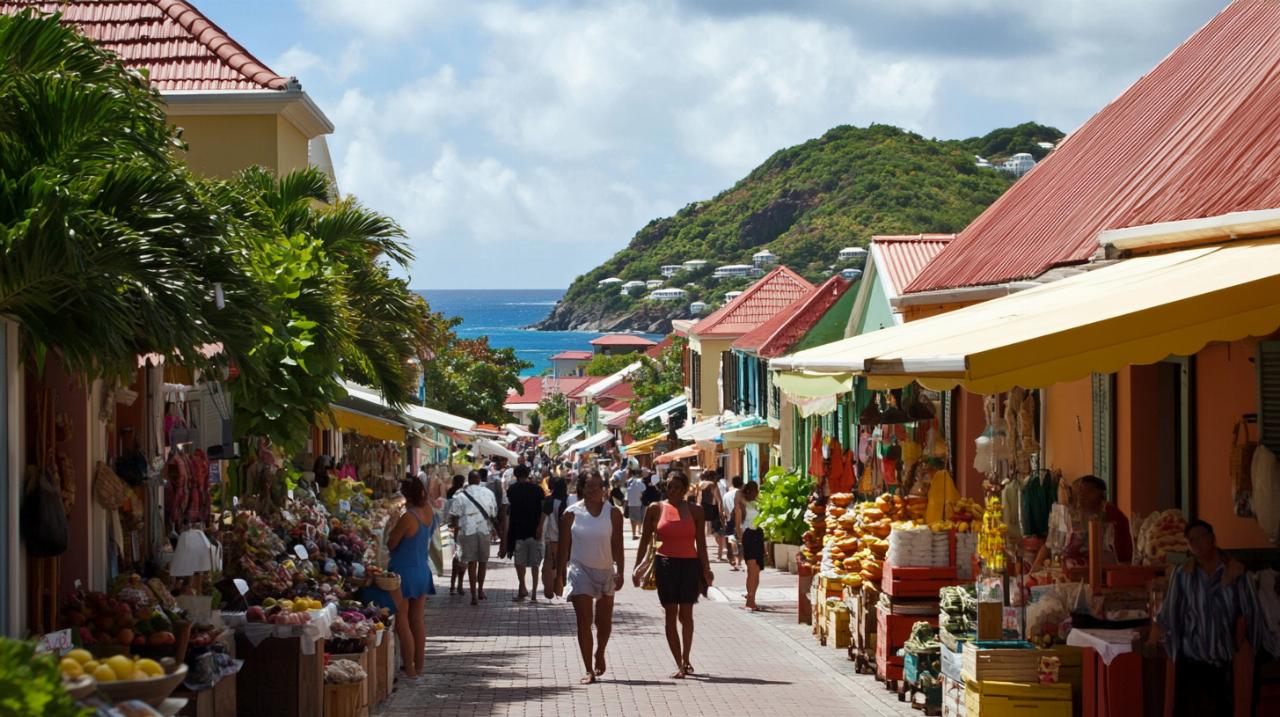
Gustavia serves as both the capital and the only town of significance on Saint Barthélemy, functioning as the administrative, commercial, and social heart of the island. This compact settlement, originally named after a Swedish monarch during the period when Sweden controlled the territory from seventeen eighty-four to eighteen seventy-eight, remains the focal point for governmental services, port facilities, and much of the island's tourism infrastructure. Unlike larger Caribbean territories divided into multiple municipal units, Saint Barthélemy operates as a single commune, with Gustavia as its central place. Settlement patterns across the island are characterised by scattered residential clusters that dot the mountainous terrain, which rises to its highest point at Morne du Vitet at two hundred and eighty-six metres above sea level. Approximately eighty-seven percent of the population lives in areas classified as urban, a surprisingly high proportion given the island's small physical footprint and the absence of sprawling metropolitan development. This concentration reflects the clustering of homes, businesses, and services near Gustavia and along the more accessible coastal areas, where infrastructure is more developed and access to amenities is easier. The remaining inhabitants occupy more remote hillside properties and agricultural zones, though even these areas are never far from the island's limited network of roads.
Comparing Saint Barth with Neighbouring Territories: Saint Martin and Other French Caribbean Communes
When placed alongside neighbouring territories, Saint Barthélemy's demographic profile reveals both similarities and striking differences. Saint Martin, the closest major neighbour, shares French administrative structures and cultural ties but hosts a substantially larger and more diverse population spread across a greater land area. While Saint Martin has experienced more rapid population growth and greater economic diversification, Saint Barth has maintained a more exclusive character, with strict development controls and a tourism model focused on luxury rather than mass-market appeal. Other French Caribbean communes, such as those in Guadeloupe and Martinique, exhibit different demographic dynamics, often with higher birth rates, younger median ages, and greater population density in their urban centres. The year-on-year changes in these territories frequently show more volatility, influenced by economic cycles, natural disasters, and shifting migration patterns. Saint Barthélemy's separation from Guadeloupe in two thousand and seven to become a distinct overseas collectivity allowed it to chart a more independent course in managing its population and development, tailoring policies to preserve the island's character while accommodating essential growth. The commune code assigned to Saint Barth distinguishes it administratively from other French Caribbean territories, facilitating more precise data tracking and policy implementation at the local level.
Vital Statistics and Population Dynamics: Births, Deaths, and Annual Changes
Birth and Death Rates Year on Year: What the Registry Data Shows
Vital statistics for Saint Barthélemy reveal a demographic regime typical of wealthy, developed societies with ageing populations and low fertility. The total number of deaths recorded in a recent year stands at approximately seventy-six, a modest figure that reflects both the small population base and the exceptional life expectancy of eighty-seven years enjoyed by island residents. The under-five mortality rate is estimated at just five point eight per thousand live births, an indicator of high-quality healthcare and favourable living conditions. However, with a fertility rate of less than one child per woman, natural population increase is minimal or even negative when considering deaths. The island's demographic vitality therefore depends significantly on net migration, which contributes around one hundred and sixty-eight persons annually. This influx consists largely of skilled workers filling positions in the tourism and service sectors, as well as affluent individuals seeking residency in this tax-advantaged territory. Year-on-year changes in births and deaths show relative stability, with little of the dramatic fluctuation seen in larger, more economically diverse populations. The low birth rate also reflects the high proportion of the population engaged in work within the tourism economy, which accounts for roughly ninety percent of economic activity and often involves long hours and seasonal intensity that may not align with raising young families.
Sources and Data Reliability: How INSEE and Local Records Track Demographic Shifts
The reliability of demographic data for Saint Barthélemy rests primarily on the rigorous methodologies employed by INSEE, which conducts regular censuses and maintains comprehensive civil registries for all French territories. As a French overseas collectivity, Saint Barth benefits from the same statistical infrastructure that serves metropolitan France, ensuring that births, deaths, marriages, and migration events are systematically recorded and analysed. Local administrative offices in Gustavia work in close coordination with INSEE to ensure data accuracy, cross-referencing civil registry records with residency permits, tax declarations, and other official documents. This multi-source approach enhances the quality and granularity of the information available, allowing planners and policymakers to make informed decisions about infrastructure development, service provision, and resource allocation. The island's small size and limited number of communes simplify data collection compared to larger territories, though this also means that even minor changes in population can have proportionally significant impacts on statistics. Maps and tables produced by INSEE provide detailed breakdowns by age, gender, and geographic distribution, offering valuable insights into settlement patterns and demographic trends. The source data also includes information on the historical context, tracing the island's population back to its indigenous Arawak and Carib inhabitants, through European colonisation beginning in sixteen forty-eight, and the arrival of Christopher Columbus in fourteen ninety-three. Today, the population is primarily of European descent, with a distinct cultural identity shaped by centuries of French and, briefly, Swedish influence, all meticulously documented in the records that form the foundation of contemporary demographic understanding.